Fast and Effective Gutter Repair for Storm-Damaged Systems

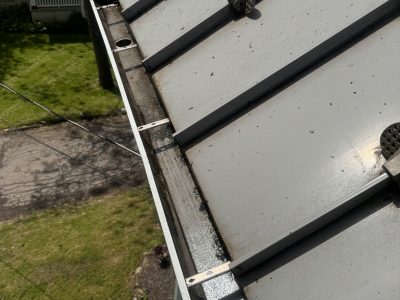
Storm damage rarely stops at a few missing shingles. Gutters take a hard hit when wind lifts sections loose, branches strike the run, or torrents of rain overload a system that was already near its limit. What looks minor from the ground, https://gravatar.com/jovial3028f70dde a slight sag, a dripping corner, a downspout hanging out of alignment, can quickly turn into fascia rot, stained siding, saturated soil near the foundation, and leaks where water starts finding the easiest path home.
Fast gutter repair matters because gutters are not decorative trim. They are a drainage system attached to the edge of the roof, and after a storm they often become the first failed link in the chain. When they stop directing water away from the house, every other exterior component starts working harder than it should. I have seen homes where the original storm damage was a ten-foot section pulled loose by wind, but the expensive repair showed up weeks later as soft wood behind the gutter and basement seepage along one corner of the foundation.
Speed helps, but speed without judgment can create a second round of problems. The goal is not simply to reattach whatever is hanging loose. Good storm-related Gutter Repair means identifying what failed, what can be salvaged, and what should be replaced before the next rain exposes the weak spots.
What storm damage usually looks like in the field
After severe weather, gutters tend to fail in recognizable patterns. Wind often loosens fasteners or pulls a long section outward just enough to break the intended slope. Heavy rain can expose seams that were already aging. Hail may dent metal without causing leaks immediately, yet those dents can flatten the pitch and leave standing water in low spots. Falling limbs do the most obvious damage, crushing troughs, twisting brackets, and sometimes tearing the fascia itself.
The tricky part is that visible damage is not always the full story. A gutter can look mostly intact from the driveway and still have a hidden issue at the back edge where water has been running behind it. Likewise, a downspout elbow may remain attached but be partially clogged with roofing granules, leaves, and shingle debris knocked loose in the storm. That kind of restriction forces water to overflow at the exact moment the system needs full capacity.
One common post-storm complaint is, “The gutter is leaking from the middle.” In practice, the middle is often not the real source. Water may be entering behind the gutter twenty feet away because the drip edge is tucked incorrectly or the gutter has pulled away from the fascia. It then travels along the channel and spills where the homeowner notices it. Storm inspections need patience for that reason. Water does not always reveal the true origin at first glance.
Start with safety and a realistic assessment
There is a strong temptation to grab a ladder the minute the wind dies down. That is not always wise. Wet soil shifts under ladder feet. Power lines may be lower than usual after a storm. Aluminum gutters can be sharp where they have torn, and branches wedged at the roofline are often less stable than they look.
If the damage involves only a short section and the roof edge is easy to access, a prompt temporary fix can prevent interior and exterior water damage. If the gutter is twisted across multiple runs, if the fascia appears split, or if tree impact is involved, a fuller inspection should come first. Once structural elements are compromised, fastening new hardware into weak wood solves very little.
A useful rule from the field is simple: if the repair can be made from a secure ladder with both feet planted and without reaching beyond your belt line, it is usually a manageable assessment. If you need to lean hard, climb onto a wet roof, or work around electrical hazards, it moves out of the fast-fix category.
The difference between temporary stabilization and true repair
Not every homeowner needs a same-day full restoration, but many do need same-day stabilization. Those are different things, and mixing them up creates trouble.
Temporary stabilization is about controlling water until proper repair materials are ready and conditions are safe. That may mean rehanging a loose downspout, clearing a blockage, or securing a detached gutter section so it does not rip the fascia farther during the next rain. In one case after a summer thunderstorm, a homeowner only needed the front corner resecured and the downspout reconnected to carry water away for the weekend. The permanent work happened two days later after replacement hangers and matching sealant arrived.
True repair restores slope, support, watertight joints, and drainage performance. That can require replacing bent sections, removing failed spikes in favor of hidden hangers, addressing fascia damage, and checking whether the storm shifted enough debris into the system to leave it underperforming even after the visible damage is gone.
The distinction matters because a temporary patch applied as if it were permanent often fails fast. Gutter sealant smeared over wet debris at a seam may hold through one shower, then open again under thermal movement. Likewise, driving screws into decayed fascia may make a gutter look secure for a week while the wood fibers keep crumbling underneath.
The parts that deserve close inspection after a storm
Storm repair works best when the inspection follows the path water takes from roof edge to discharge point. That keeps the process grounded in function, not appearance.
- Check the fascia and rafter tail area first, because solid attachment matters more than the gutter metal itself.
- Examine the gutter slope next, looking for sags, bellies, and sections pulled away from the roofline.
- Inspect seams, end caps, corners, and outlet connections where leaks commonly open under stress.
- Run attention down the downspouts and elbows, where storm debris often creates hidden restrictions.
- Finish at the discharge point, making sure water is still directed far enough away from the foundation.
That sequence catches the issues that lead to repeat call-backs. I have seen well-meaning repairs fail simply because the installer sealed a corner leak without noticing that the whole run had dropped a half inch at midspan. Once the next heavy rain filled that low area, pressure found the seam again and the leak “mysteriously” returned.
Fast repairs that often work, and the conditions for each
Some gutter problems can be fixed quickly and effectively if the underlying materials are still sound. A detached gutter section with no sharp deformation often responds well to new hidden hangers spaced properly and anchored into solid wood. This is especially true in systems that still rely on old spikes and ferrules. Storms expose the weakness of that older fastening method, and upgrading the support hardware can be a genuine improvement rather than a patch.
A leaking seam can sometimes be repaired in place if the metal is not distorted, the joint can be cleaned thoroughly, and the sealant is compatible with the gutter material. The key word is cleaned. Wet dirt, oxidation, and old failing caulk must be removed first. Otherwise the new sealant bonds to contamination instead of the gutter.
Downspout repairs are usually straightforward unless impact has crushed the pipe beyond reshaping. Reconnecting elbows, replacing straps, and clearing packed debris can restore full flow quickly. Yet even here, alignment matters. A downspout under stress because the upper outlet shifted during the storm will continue pulling at the joints until the run is brought back into line.
Minor dents are often more cosmetic than functional. If the gutter still drains and the slope remains correct, replacing an entire section for appearance alone may not be urgent. But when dents flatten the bottom enough to trap water, what looks like a cosmetic blemish becomes a performance issue. Standing water adds weight, accelerates corrosion in steel systems, and turns winter freeze-thaw into a destructive cycle.
When repair stops making sense
There is a point where “repair” becomes an expensive way to delay replacement. Storm damage often reveals age-related failure that was already underway. If multiple seams are opening, the metal is thinning, the fascia is soft in several locations, and the gutters were undersized to begin with, fast repair can turn into repeated service calls across one rainy season.
Seam-heavy sectional gutters tend to show their age after major weather events. Once movement starts at corners and joints, repairing one leak may simply push the next weak point into service. In those cases, replacing a damaged elevation with a seamless run is often the better investment. The upfront cost is higher, but it avoids paying repeatedly for spot fixes that do not address the basic limitations of the old system.
Another edge case involves roof changes. If a new roof was installed and the gutter alignment was left marginal, a storm can expose that mismatch fast. Water overshoots the gutter, backs up at valleys, or runs behind the trough because the drip edge relationship is wrong. Strictly speaking, that is not just storm damage, but the storm is what makes the weakness impossible to ignore. Repair must then include correcting the interface between roofing and guttering, not just the gutter hardware.
Materials matter more than many homeowners realize
Aluminum remains common for good reason. It is lightweight, rust-resistant, and usually practical for quick storm-related Gutter Repair. But aluminum bends easily, so impact damage can be harder to hide. Steel offers more rigidity, though once protective coatings are compromised, rust becomes part of the long-term conversation. Copper is durable and attractive, but storm repairs need a light touch and compatible materials, especially around soldered joints and dissimilar metals.
Vinyl systems can be quick to patch in theory, but they become brittle with age and temperature swings. After a strong storm, a cracked vinyl corner often indicates that surrounding fittings have also been stressed. Replacing one piece may be possible, though matching older faded components is not always easy, and the repair can expose the fragility of the rest of the run.
Fasteners deserve equal attention. Modern hidden hangers with screws generally outperform old spike-and-ferrule systems under wind load. If a storm has loosened several spikes, that is often a sign to upgrade the support method on the whole affected section. Simply driving the spikes back in can work for a short time, but wood does not regain strength because the same hole got another fastener.
The repair process that saves time without cutting corners
The fastest effective repair crews follow a disciplined routine. They do not guess at slope by eye from one ladder position and hope for the best. They remove the failed section or loosen it enough to reestablish proper pitch. They confirm that the fascia can hold the load. They clean and prep sealant areas thoroughly. Then they test water flow before packing up.
A small amount of setup time saves a surprising amount of labor. For example, placing ladders so each worker can cover a practical section reduces overreaching and repeated repositioning. Bringing both fasteners and matching accessories to the site, hangers, outlet tubes, elbows, sealant, rivets, screws, avoids the half-fixed condition that leaves a house vulnerable until someone returns.
Water testing is one habit that separates decent repairs from reliable ones. A hose run from the highest point reveals whether water is flowing cleanly to the outlet, backing up at a hidden low spot, or escaping at the rear edge. Without that final test, it is easy to miss a subtle problem that only shows itself under sustained flow.
Cost, speed, and the trade-offs homeowners should understand
Homeowners often ask whether it is worth repairing just the damaged section after a storm. Sometimes it absolutely is. If the rest of the system is relatively new and the impact was isolated, sectional repair is sensible and cost-effective. But matching color and profile can be harder than expected, especially on older systems where the manufacturer’s dimensions or finish have changed.
Emergency service also carries a premium in many markets, and that is not unreasonable. Working after storms means compressed schedules, safety risks, and high demand. Still, a higher price does not automatically buy better judgment. The best estimate is usually the one that explains what is damaged, what can be restored, and whether the repair is expected to blend with the age of the existing system or simply restore function.
A candid contractor will also say when speed has limits. Sealants need suitable surface conditions. Fascia repairs take time. If heavy rain continues for several days, the right move may be to stabilize first and return for permanent work when surfaces are dry enough for a lasting bond.
Signs the storm exposed a bigger drainage problem
Sometimes the gutter did not truly fail, it was overwhelmed by conditions it was never sized to handle. Steep roofs dumping into short runs, inside corners collecting concentrated flow, and roof valleys feeding a single small outlet are common problem areas. A storm makes them obvious because the volume exceeds the margin of error.
Here are a few warning signs that point beyond simple damage:
- water sheeting over the front edge even where the gutter is firmly attached
- repeated overflow at one corner despite clear downspouts
- erosion or washout directly below a discharge point
- staining behind the gutter or on the fascia board
- standing water left in the trough a day after rain ends
In those cases, repair may need to include capacity improvements such as an additional downspout, larger outlets, splash control at valleys, or a wider gutter profile on problem sections. A fast fix that restores the old setup without addressing the overload condition can leave the homeowner frustrated the next time a storm hits.
Preventing the next failure starts during the repair
Storm-damaged gutters offer a useful chance to strengthen the system rather than merely return it to yesterday’s weakness. Better hanger spacing in high-wind areas, improved downspout strapping, fresh sealant at stress-prone joints, and correcting slight back-pitch can all be done during repair with modest additional labor.
Tree management is another practical part of prevention. Branches hanging over the roofline are not just a leaf source. In storms they become levers and projectiles. Trimming back the canopy will not eliminate debris, but it does reduce the odds of direct impact and severe clogging from twigs and seed pods after heavy weather.
Maintenance timing matters too. A system that goes into storm season already full of decomposing leaves has far less capacity when a cloudburst arrives. Cleaning once in late fall is not enough in every setting. Homes under pines or broadleaf trees often benefit from a second cleaning before the wettest season begins.
Choosing a repair approach that fits the house
There is no single best method for every storm-damaged system. A newer aluminum run with one detached corner may need only rehanging and resealing. An older home with softened fascia and multiple leaks may need carpentry before any gutter work can hold. A house with repeated overflow in one valley may need redesign as much as repair.
That is why the best Gutter Repair is both fast and selective. It moves quickly where speed prevents secondary damage, yet it slows down long enough to solve the actual failure. Homeowners are usually best served when the repair plan answers three practical questions: Will it hold through the next hard rain? Does it restore proper drainage rather than just improve appearance? And does it make sense given the age and condition of the rest of the system?
Storms test every weak point at once. A good repair answers with solid attachment, clear flow, correct pitch, and an honest assessment of what the gutter can still do. When those pieces come together, the result is not just a neat roofline. It is a house that sheds water the way it was meant to, even when the weather is doing its worst.
Just Gutters LLC
262 Main St
Hackettstown, NJ 07840, United States
Phone: +1 201-331-9454
FAQ About Gutter Repair
Is it cheaper to repair or replace gutters?
Repair can cost less when damage is limited and the remaining system is sound. Replacement may offer better value when leaks, corrosion, or repeated failures affect several sections. An inspection and written estimate can help compare the options.
Can damaged gutters be repaired?
Many localized problems, including leaking joints, loose brackets, sagging sections, and damaged downspout connections, can be repaired. The best approach depends on the material, extent of damage, and condition of the mounting surface.
Can I repair gutters myself?
Simple ground-level checks may help identify a problem, but roof-edge work carries fall risks and may require specialized tools. Professional assessment is advisable for high gutters, loose sections, hidden wood damage, or uncertain drainage problems.